
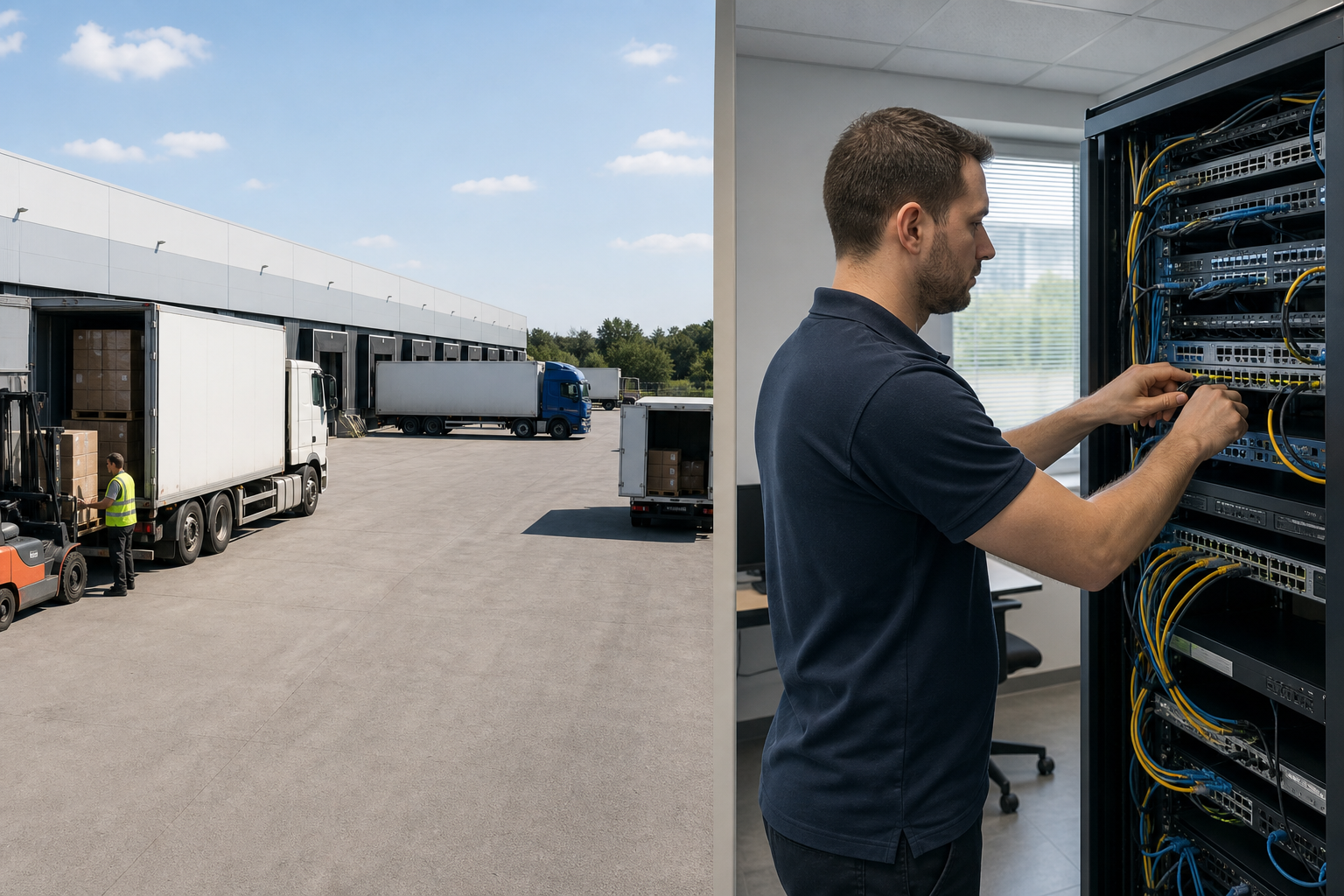
A national logistics operator ran depot systems on inconsistent network templates while cloud workloads used a separate identity store — slowing incident response.
Problem
Branch VPN configs diverged over years. Privileged access reviews covered cloud only. Shipment tracking outages were hard to isolate between network and application layers.
Approach
Reference network patterns rolled out region by region. Federated identity linked depot admins to cloud IAM. Monitoring tagged paths by business service.
Result
Cross-site incidents triaged 35% faster. Access review covered all environments in one cycle. Planned depot openings now deploy from template in days, not weeks.
Distributed sites and cloud control planes need consistent identity and DNS — otherwise hybrid becomes a permanent integration tax on every new application.
“New branch onboarding dropped from weeks to days once reference network and identity patterns were in place.”
Frequently Asked Questions
What was the core network challenge?
Inconsistent VPN, split DNS, and ad-hoc firewall rules between branches and cloud landing zones.
How was identity unified?
Federated SSO with conditional access policies and standardised group models for branch and cloud admins.
Were SD-WAN or private links used?
Hybrid connectivity matched site class — private link for hubs, optimised internet paths for smaller branches with failover tested.
How is the design maintained?
Reference architecture with automated compliance checks on new subnet and DNS requests.